

Installing Your New HardwareLocation of Cabinet Hardware
While there are no hard, fast rules for placement of a knob or pull on a cabinet door, most cabinet makers will locate them approximately 3"-4" above the upper non-hinged corner on base cabinets, or the lower non-hinged corner on wall cabinets.
Mounting Cabinet Hardware
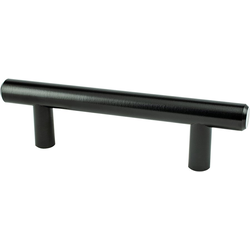
When drilling for a knob or pull, a 3/16" hole is recommended for most styles. The exception is pulls that have "studs”. A stud is simply an extension of the molded screw holes. If a pull has a stud, then a 1/4" hole is required with studs sitting securely in the wood.
Important Screw Information
In most cases, a 1" long screw is included with your knob or pull. However, if your cabinet doors or drawer fronts are thicker than 3/4", then you will need to use longer screws for mounting. Check the thickness of both a cabinet door and a drawer front in your kitchen, as the thickness dimensions may not be the same. In general, the screw length(s) used should be 1/4" longer than the thickness of your cabinet door or drawer front material. It is not uncommon for some drawers to be constructed with a3/4" thick front attached to a 3/4" thick drawer box. In this situation, the total drawer thickness is 1-1/2", making a 1-3/4" long screw necessary for mounting. These screws may be purchased using the attached links:
http://www.cabinetparts.com/c/screws-and-accessories/screws/knob-and-drawer-pull-screws/QS9100/
http://www.cabinetparts.com/c/screws-and-accessories/screws/knob-and-drawer-pull-screws/QS9103/
Mounting Pulls
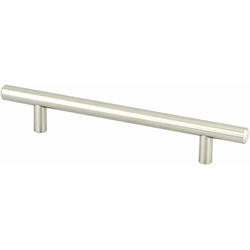
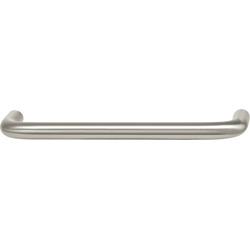
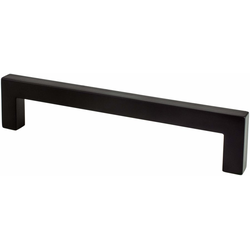
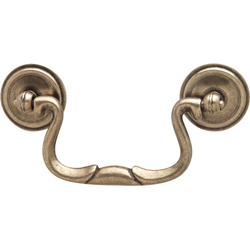
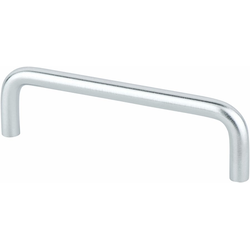
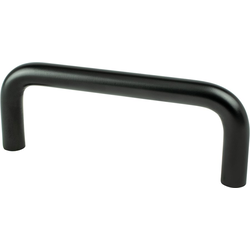
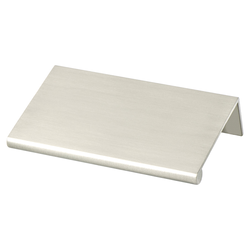
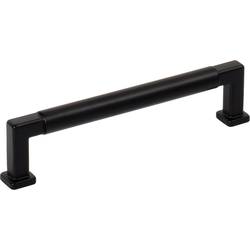
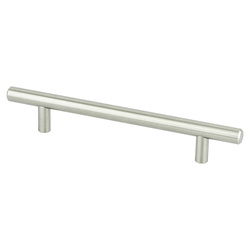
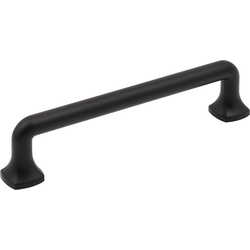
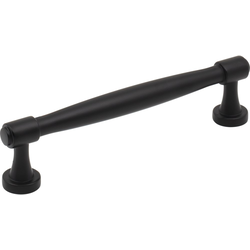
Pulls can be obtained in U.S. measurements as well as metric. Cabinetparts.com offers a huge range of sizes to choose from. To choose the right sizes keep in mind the following:
- Take note of all available sizes
- 3" is the most common size pull
- Size is determined by measuring from screw hole to screw hole, not the length of the pull itself.
If you are using a pull, you will want to determine the hole center spacing of the pull. You may want to create or purchase a template prior to drilling such as the True-Position Drill Guide System.
http://www.cabinetparts.com/c/tools-and-templates/true-position-drill-guide/
This will ensure that your pulls are parallel with the door or drawer edge and they that are at the same placement height on every cabinet.
Mounting Knobs
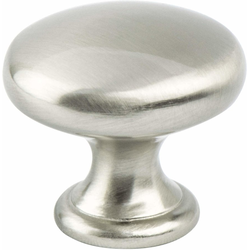
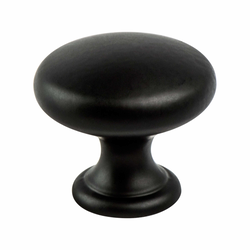
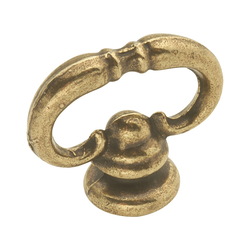
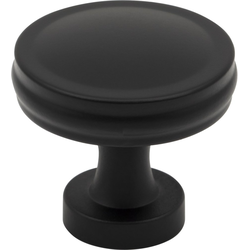
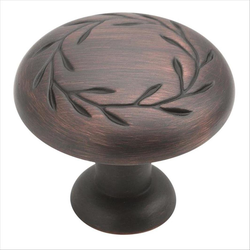
Knobs can be obtained in a wide variety of shapes, sizes and diameters. Cabinetparts.com offers thousands to choose from.
There are no rights or wrongs when it comes to knob selection. Choose the size that looks best in proportion to your cabinet or drawer. A 1-1/4" or a 1-3/8" diameter knob is the most popular size. To create a dramatic look, consider using an oversize knob (1-1/2" or larger).
If you are using a knob, you may want to create or purchase a template prior to drilling such as the Tru-Position Drill Guide System.
http://www.cabinetparts.com/c/tools-and-templates/true-position-drill-guide/
This will ensure that your knobs are properly positioned on the door or drawer and they that are at the same placement height on every cabinet.
Replacing Cabinet Hardware
Pulls: When replacing pulls, the choices are numerous. You may choose to go with a pull with the same hole centers as your existing pull. Pull size is determined by measuring from hole to hole, not by the length of the pull itself. However, if you do choose to use a pull which is longer or shorter, the following information will assist you:
- On wall cabinets, reuse the bottom hole and drill a new top hole
- On base cabinets, reuse the top hole and drill a new bottom hole
- On drawers, drill 2 new holes and realign in the center
Knobs: When replacing knobs, simply unscrew your old knob. Leave the old screw in place, screw on your new knob. Nothing could be easier!
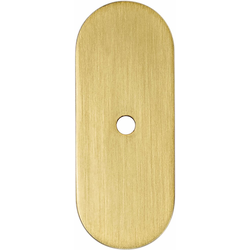
Backplates: If you are switching sizes of pulls or from a knob to a pull, or from a pull to a knob, there may be one or more exposed holes in the cabinet surface. To remedy this situation, you may choose to use a backplate. Backplates are used in conjunction with a knob or pull. It is placed between the cabinet door or drawer surface and the knob or pull. Backplates also help to protect the wood surface, and visually enhance the existing decorative hardware.
Note: If you are switching from a knob to a pull or from a pull to a knob, generally there will be one or more exposed holes in the cabinet surface! Backplates will cover the old mounting holes.